
"Ethiopia coffee market"
6000 article(s) found

Sunburn Yega Chefe Ethiopia Eriga arichaG1 Yega Chefe
In fact, according to Ms. Knudsen, people started drinking fine coffee, but later, due to the growing demand for coffee, the discovery and use of new coffee varieties led to the decline of coffee quality. later, people even began to dislike this bad coffee and began to turn to other drinks. In this case, Ms. Knudsen's re-recognition

Grade of Ethiopian coffee | ECX rating and scoring criteria? Special selection of ECX in Yega Xuefei producing area
Professional coffee knowledge exchange more coffee bean information please follow the coffee workshop (Wechat official account cafe_style) the grade of Ethiopian coffee | ECX grading and scoring criteria? Yega Xuefei production area ECX specially selected washing G1 flavor? Ethiopian washed coffee Yega Chuefei G1 G2, the highest levels of Cedamo (Yirgacheffe, Sidamo) are level 2 and 3 (G2, G3)

The birthplace of coffee, Ethiopia.
The coffee tree originated in Ethiopia, which was originally a wild plant here, and the name coffee comes from the Ethiopian town of Kaffa. In fact, many coffee trees in Ethiopia are still wild plants, and the coffee grown on this coffee tree is full-grained and slightly alcoholic. Humans may have known how to grow coffee trees as early as the 9th century, but

Ethiopian coffee beans are imported. How can I buy mcofa coffee?
For more information on coffee beans, please pay attention to Coffee Workshop (Wechat official account cafe_style) Ethiopia is still a very important coffee exporter in the world, mainly producing Sidamo in Sidamo, Yirgacheffe in Yegashev, Kochere in Cochel, Harar in Hara and Djimma in Jima. Located in the south of Ethiopia, Sidamo, Yegashev,

Ethiopian Coffee Ted Manor Flavor description Variety characteristics of High-quality Coffee beans
The coffee market regulatory body in Ethiopia is the Ethiopian Coffee and Tea products Administration. There are two auction centers in the country, one in the capital Addis Ababa (Addis Ababa) and the other in Dire Dawa in eastern Ethiopia. Coffee growers bring fresh fruit or to private coffee processing plants or cooperative coffee washing stations

The taste of boutique Ethiopian coffee the introduction of Blue Mountain Coffee of Ethiopia
The birthplace of coffee-Ethiopia. The coffee tree originated in Ethiopia, which was originally a wild plant here, and the name coffee comes from the Ethiopian town of Kaffa. In fact, many coffee trees in Ethiopia are still wild plants, and the coffee grown on this coffee tree is full-grained and slightly alcoholic. Humans may have been in the 9th century.

A brief introduction to the Origin and Development of Flower-scented Apricot Coffee beans in Ethiopia
Ethiopia grows coffee in different climatic zones, so it has more than 140 farm varieties, and fresh coffee is produced all the year round. The quality of Ethiopian coffee varies according to different elevations and regional ecological environment. The Harar coffee in the southeast highland is a typical Muha coffee with a strong flavor; the coffee produced in the southwest Wollega has a rich fruity flavor; Limu coffee

A brief introduction to the market price of Essex plus Chuefei washing Wakayega native high-quality coffee beans
Compared with the traditional sun-treated Harald area, sun exposure is not common. As the first water washing plant in Ethiopia, coffee drinkers are more familiar with Yejia, which is famous for its elegant lemon and orange style. The coffee flavor treated with water washing is not easy to have wild flavor, has the characteristics of purity and freshness, and is suitable for light roasting degree.

Ethiopia Yega Sheffield Ginger White Flavor how is the treatment process of Baghi treatment Plant
Producing area | Yirgacheffe altitude | 1800-2100 m varieties | Annual rainfall of native species (Heirloom) | 1800-2000mm treatment | washing flavor | Ginger flower, bergamot, lemon, white peach sweetness, oolong tea tail rhyme, fruit juice taste Yirgacheffe is a small town in Ethiopia, 1700-2100 m above sea level

An introduction to the Cultural History of Coffee Bean Story in Ethiopia
Introduction to the Cultural History of the Ethiopian Coffee Bean Story Getachew Mengistie, director of the Ethiopian Bureau of intellectual property, bluntly pointed out that farmers sell raw beans for $1.45 per pound, while Starbucks sells for $26 per pound in the United States, a price difference of 18 times. The reason is that Ethiopia does not know how to use intellectual property rights to create value for farmers.

The method of growing Ethiopian coffee beans the price of fine coffee in Ethiopia
The birthplace of coffee-Ethiopia. The coffee tree originated in Ethiopia, which was originally a wild plant here, and the name coffee comes from the Ethiopian town of Kaffa. In fact, many coffee trees in Ethiopia are still wild plants, and the coffee grown on this coffee tree is full-grained and slightly alcoholic. Humans may have been in the 9th century.

The Development History of Fine Coffee in Ethiopia
One of the rarest Ethiopian coffee beans on the market is Ilgachafi, which is exported to Japan and Europe but is rarely seen in the United States. This is because Dallmeyer, a German coffee roaster owned by Nestl, has established a close relationship with the growers of Ilga Chafi coffee, thus obtaining the largest order of this kind of coffee beans.

A brief introduction to the market price of Sidamo Shakiso boutique coffee beans with lively and sour taste
Antigua coffee can be traced back to the Mayan civilization. Due to the eruption of the volcano, the soil here is more nutritious, and the sufficient sunlight and moisture also make the coffee produced excellent quality. Most importantly, the residents here insist on growing Arabica bourbon coffee, although the yield is small, but the texture is better. Because the residents of Antigua grow coffee in a large area,
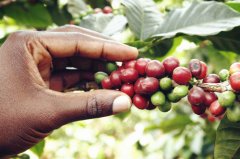
Ethiopian Coffee exports Fine Coffee
Coffee export coffee is Ethiopia's most important export cash crop and the main source of Ethiopia's foreign exchange earnings. Ethiopia's coffee exports account for about 3% of the world market, making it the eighth largest coffee exporter in the world. Coffee exports increased steadily from 58000 tons in 1990 to 110000 tons in 1995-1996 and remained at this level in the following years. two

A brief introduction to the Market Price of Ethiopian Fine Sidamo Coffee varieties
The highest grades of Ethiopian washed coffee Yega Chuefei G1 G2 Sidamo (Yirgacheffe, Sidamo) are Grade 2 and Grade 3 (G2, G3), while most of the sun-processed coffee in eastern Ethiopia are Grade 4 or Grade 5 (G4, G5). In many cases, level 4 coffee is marked as level 5 in order to reduce taxes. At present, the grading is not uniform and messy, because there is also sun processing.

Ethiopia coffee plantation producing area flavor description processing method variety characteristics introduction
Getachew Mengistie, director of Ethiopia's Intellectual Property Bureau, pointed out that farmers sell for $1.45 per pound of raw beans, while Starbucks sells for $26 per pound in the United States, an 18-fold difference. The reason is that Ethiopia does not know how to use intellectual property rights to create value for farmers.
World famous Coffee Tour: Yega Snow Coffee, Ethiopia (part two)
[product name]: Ethiopia Ethiopia Yirgacheffe [quality rating]: WP Grade 2 [baking]: recommended moderate baking (Medium Roast or City Roast) [grade]: excellent [granule]: ★ full [acidity]: ★★★★ slightly sour, dark chocolate aftertaste [balance]: ★★★★ is very stable

Introduction to Ethiopian Flavor planting Industry of Fine Coffee, the birthplace of Coffee
For the exchange of professional baristas, please follow the coffee workshop (Wechat official account cafe_style) the birthplace of Ethiopian (Ethiopia) coffee-the Ethiopian coffee tree originated from Ethiopia (Ethiopia), it was originally a wild plant here, and the name coffee comes from Ethiopia.

A brief introduction to the history and culture of the origin and development of sweet Ethiopian boutique coffee beans
Getachew Mengistie, director of Ethiopia's Bureau of intellectual property, bluntly pointed out that farmers sell raw beans for $1.45 a pound, while Starbucks sells for $26 a pound in the United States, 18 times the price difference between the two places. The reason is that Ethiopia does not know how to use intellectual property rights to create value for farmers, as long as the name of Ethiopian high-quality beans, it can be higher than the average in the United States.

You must know Yega Xuefei, the most high-profile producing area of Ethiopian coffee brands.
Professional coffee knowledge exchange more coffee bean information please follow the coffee workshop (Wechat official account cafe_style) Ethiopia is an important boutique coffee producing area, but also currently the place where coffee is grown. If you mention Ethiopia, you must know Yegashafi. Today, let's take a look at the special feature of this producing area. Ethiopia is Arabica.